Stitching Style: Why the Butternut Embroidery Font is a Game Changer
There is a distinct tactile quality to embroidery that digital design often tries to emulate but rarely captures. When you are working with physical fabric and thread, the typography you choose has to function differently than it does on a flat screen. It needs depth, texture, and a personality that can survive the translation from vector to needle. This is precisely where the Butternut Embroidery Font enters the conversation. It is not merely a set of letters; it is a carefully engineered design asset that bridges the gap between the fluidity of modern typography and the technical demands of machine stitching. For designers, small business owners, and hobbyists alike, finding a font that balances elegance with "sewability" is often the hardest part of the project, and Butternut offers a compelling solution to that creative puzzle.
The Anatomy of a Versatile Typeface
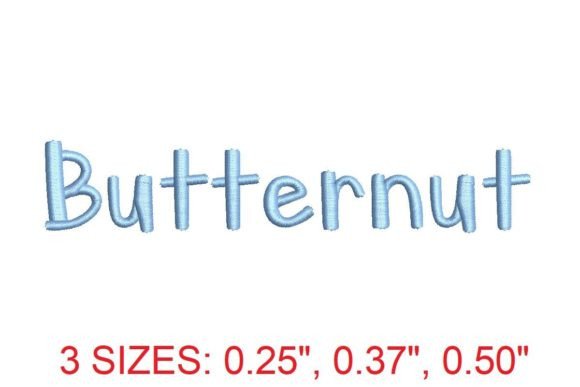
At its core, Butternut is a scripted display font that leans into a handwritten aesthetic without sacrificing legibility. One of the most common pitfalls in embroidery typography is choosing a script font that is too loose or intricate, leading to thread breaks or a "muddy" look where stitches overlap excessively. Butternut avoids this by offering a seamless blend of elegance and structure. The letterforms are designed with stitching in mind, meaning the connections between letters are intentional and the spacing is optimized for needlework.
When looking at the technical specifications, the versatility becomes apparent. The file comes with a comprehensive collection of 156 letters. This is a significant detail for anyone involved in branding or commercial work. A standard alphabet limits you to 26 uppercase and 26 lowercase characters, but a set of 156 includes numerals, punctuation, and likely a variety of stylistic alternates or swashes. This allows for true customization. Whether you are monogramming a wedding gift or creating a logo for a boutique clothing line, having access to a full glyph set ensures that your typographic expression isn't limited by a missing character. Furthermore, the availability of multiple embroidery file formats means this premium font is accessible to virtually any machine operator, removing the technical barriers that often frustrate creatives.
Beyond the Monogram: Strategic Branding Applications
While embroidery is often associated with personalization—think towels, robes, and baby blankets—the commercial applications for a high-quality embroidery font are vast. For small business owners, consistency is the bedrock of brand recognition. If your brand identity relies on a rustic, artisanal, or boutique vibe, the Butternut font can serve as a cornerstone of your visual communication.
Consider the power of branded merchandise. In a market saturated with screen-printed graphics, embroidered apparel carries a perception of higher value. It feels permanent and crafted. Using Butternut for your logo on polo shirts, tote bags, or beanies immediately elevates the product. Because the font is designed to be visually appealing with its detailed stitching, it translates well to social media graphics as well. You can digitize a quote or a brand slogan using this font for a physical product, then photograph that product for your Instagram feed. The consistency between the physical item and your digital marketing assets reinforces your brand identity.
Moreover, this typeface isn't limited to thread. Because it is a high-quality digital asset, it can be used in graphic design software for packaging design or web design elements where a "hand-crafted" feel is desired. Imagine the header of a website or the text on a coffee bag label using the Butternut typeface. It communicates warmth and approachability, qualities that are essential for businesses trying to connect with a modern audience looking for authenticity.
Practicality Meets Artistic Flair
From a practical standpoint, the utility of the Butternut Embroidery Font lies in its adaptability across different scales. The provided sizing information—referencing the dimensions of "A" and "a"—is a crucial piece of data for production planning. In embroidery, scale affects density. A letter that looks perfect at 3 inches might become a dense block of thread at 0.5 inches, leading to needle breaks or fabric puckering.
Butternut is designed to handle these variations gracefully. For editorial layouts or print materials, a font with a distinct personality helps guide the reader's eye. In the context of embroidery, this "readability" translates to the physical world. Whether you are stitching a large back patch for a denim jacket or a small monogram on a chest pocket, the font maintains its integrity. This is particularly important for content creators and entrepreneurs who are expanding into digital products. If you are selling embroidery patterns or kits, offering a design that utilizes a professional, tested font like Butternut adds perceived value to your product. It signals to your customer that you care about the details, from the thread weight to the typography.
Harmonizing Typography for Maximum Impact
No font exists in a vacuum. A key aspect of professional design is understanding font pairing—how different typefaces interact with one another to create a hierarchy and mood. Butternut, with its scripted and somewhat organic nature, pairs exceptionally well with clean, geometric sans-serif fonts.
Imagine a t-shirt design where the word "EST. 2024" is stitched in a bold, blocky sans-serif, and the business name is rendered in the flowing curves of Butternut. The contrast creates visual interest and improves readability. The eye is drawn to the script because it is unique, but the sans-serif provides the necessary anchor to make the information digestible.
When utilizing Butternut for marketing assets or invitations, it is wise to reserve it for headlines, names, or key phrases rather than body text. Script fonts, by nature, are display fonts intended for impact, not for reading long paragraphs. By using Butternut strategically, you ensure that its artistic flair enhances the project rather than overwhelming it. This approach is vital for maintaining a professional presentation, whether you are designing a poster for a local market or creating digital assets for an email campaign.
Technical Confidence and Creative Freedom
For the crafter or the entrepreneur, the anxiety often lies in the execution. Will the file work with my machine? Will the stitches look right? The inclusion of multiple file formats and detailed stitching information in the Butternut download package alleviates much of this stress. It is a "plug-and-play" asset designed for efficiency.
This technical reliability frees up mental space for creativity. When you aren't troubleshooting file compatibility or density issues, you can focus on the artistry of your project. You can experiment with thread colors, placement, and the interaction between the text and the fabric texture. Whether you are a hobbyist looking to infuse your projects with a personal touch or a marketer aiming to create tangible brand connections, having a reliable toolset is paramount.
Ultimately, the Butternut Embroidery Font is more than just a download; it is an investment in the quality of your output. It offers the sophistication of a modern script font with the rugged dependability required for embroidery. By integrating this typeface into your workflow, you are not just choosing a style; you are adopting a standard of quality that elevates every stitch, every brand interaction, and every creative piece you produce.